
What is a CCSL?
The Combined Continuity & Spotting List is the master delivery document required by every streaming platform, distributor, and international sales agent. Here is everything you need to know about what it is, what it contains, and why your film cannot be distributed without one.
The document at the heart of every film delivery package.
A Combined Continuity & Spotting List (CCSL) is a comprehensive written record of everything that occurs in a finished film — every word of dialogue spoken, every music cue, every sound effect, and every piece of on-screen text — documented with precise timecode references and formatted to the exact delivery specifications required by the distributor or streaming platform.
The CCSL is not a creative document. It is a technical delivery requirement — a legal and contractual document that every distributor, streaming platform, and international sales agent requires as part of the film delivery package. Without a correctly formatted CCSL, a film cannot be accepted for distribution, cannot be localized into other languages, and cannot be made accessible through closed captioning or audio description.
Think of the CCSL as the master reference document for your film. Once created, it becomes the source document from which all international versions of your film are derived — foreign language subtitles, dubbed versions, audio descriptions, and closed captions all originate from the CCSL.
"A Combined Continuity & Spotting List is a complete written record of all audio and visual elements of a finished motion picture, documented with frame-accurate timecode, prepared to the delivery specifications of the commissioning distributor or platform."
What a CCSL contains.
A complete CCSL is divided into four distinct sections, each serving a specific function in the distribution and localization pipeline. Every section must be present and correctly formatted for the CCSL to be accepted by a distributor or streaming platform.
The complete verbatim transcript of every word spoken in the film, including all narration, voice-over, and on-screen dialogue. Each line is referenced with a scene number and precise timecode in and out points.
- Verbatim dialogue — every word, exactly as spoken
- Character identification for each line
- Timecode in and out for every line
- Scene numbers matching the locked script
- Action descriptions for key non-dialogue moments
- Voice-over and narration identified separately
A complete log of every music cue in the film — original score and licensed music — with full publishing information required for music licensing, royalty payments, and international clearances.
- Cue number and title
- Composer and lyricist credits
- Publisher and performing rights society
- Timecode in and out for every cue
- Usage type — background, foreground, vocal
- Whether music is original score or licensed
A complete log of all significant sound effects in the film, spotted to timecode. Used by dubbing studios and post-production houses when creating foreign language versions of the film.
- All significant SFX spotted to timecode
- Foley and designed effects noted separately
- Ambience and room tone referenced
- Effect descriptions in plain language
- Duration of each effect
- Mixing notes where relevant
A complete record of all text that appears on screen — title cards, location supers, character names, signs, graphics, and any other written content visible in the frame — with timecode references.
- All title cards and intertitles
- Location and time supers
- Character name supers
- Signs, posters, and readable graphics
- End credits log
- Screen position noted for each element
A CCSL is delivered in one or more of the following formats depending on the distributor's requirements:
No CCSL.
No distribution.
The CCSL is not optional. Every major streaming platform, domestic distributor, and international sales agent requires a correctly formatted CCSL as a mandatory component of the film delivery package.
Every distribution contract — whether with Netflix, Amazon, a theatrical distributor, or a foreign sales agent — includes a delivery schedule that lists required materials. The CCSL is on every single one of those lists. Failure to deliver a correctly formatted CCSL can constitute a breach of contract and delay or prevent payment of your advance.
When your film is sold to a foreign territory, the CCSL is the primary document used to create the foreign language version. Dubbing studios use the dialogue continuity to write adapted scripts. Subtitle houses use the timecodes to time subtitles. Without a CCSL, your film cannot be localized and therefore cannot be distributed internationally.
The music cue sheet section of the CCSL is used by performing rights societies, publishers, and music supervisors to track and pay royalties for music used in your film. Without an accurate music log, rights holders cannot be compensated — creating legal liability for the production.
ADA Title II requirements and streaming platform accessibility mandates require closed captions and audio description for all content. The CCSL is the source document from which closed captions and SDH subtitles are created.
When a streaming platform acquires your film, the acquisition contract specifies a delivery deadline. Missing that deadline — often because a CCSL was incorrectly formatted and rejected on first submission — can result in financial penalties or contract termination.
"The CCSL is the foundation of everything that happens after picture lock. Every international version of your film — every subtitle, every dub, every accessibility track — starts here."
CCSL vs. Continuity Script
vs. Spotting List.
These three documents are frequently confused. Here is a clear breakdown of what each one is, what it contains, and when each is required.
| CCSL | Continuity Script | Spotting List | |
|---|---|---|---|
| What it is | Complete master delivery document combining all elements | Verbatim dialogue transcript only | Music and/or SFX log only |
| Dialogue | ✓ Full verbatim with timecode | ✓ Full verbatim with timecode | — Not included |
| Music log | ✓ Full cue sheet included | — Not included | ✓ Music only version |
| Sound effects | ✓ Full SFX spotting | — Not included | ✓ SFX only version |
| On-screen text | ✓ All supers and titles | — Not included | — Not included |
| Required by Netflix | ✓ Mandatory | — Not accepted alone | — Not accepted alone |
| Required by Amazon | ✓ Mandatory | — Not accepted alone | — Not accepted alone |
| Used for dubbing | ✓ Primary source document | ✓ Dialogue reference only | — Not used for dubbing |
| When required | All distribution — streaming, theatrical, festival, international | Some older contracts — largely replaced by CCSL | Music licensing — sometimes required separately |
CCSL requirements by
streaming platform.
Every major streaming platform has its own specific CCSL delivery requirements. These specifications change without notice — Gotham CCSL monitors every update so your document is always built to the current spec.
A CCSL requires
a specialist.
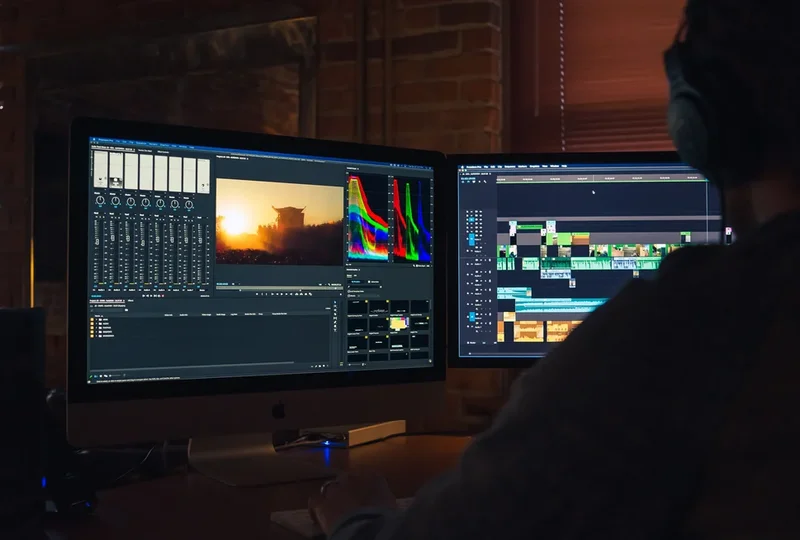
A CCSL cannot be created from a production script or a first draft transcript. It must be prepared from the locked picture — the final, approved cut of the film — because every timecode reference must match the exact frame of the finished film.
A CCSL prepared by a non-specialist is frequently rejected on first submission — costing production companies significant time and money in revision cycles. Errors in timecode, missing music cue information, or incorrect formatting can delay a film's release by weeks.
See what a real CCSL
looks like.
Download our sample CCSL to see exactly how a professional Combined Continuity & Spotting List is structured and formatted. This sample shows the real-world format used for Netflix delivery — including the dialogue continuity, music cue sheet, sound effects spotting list, and on-screen text log.
Use it as a reference when reviewing CCSL proposals from vendors, when briefing your post-production team, or when checking what your distributor's delivery requirements actually mean in practice.
This is a real CCSL prepared by the Gotham CCSL team — not a template or a mock-up. It represents the standard of work we deliver on every project.

— Netflix Format
A real Combined Continuity & Spotting List prepared to Netflix delivery specifications. Shows all four parts: dialogue continuity, music cue sheet, SFX spotting, and on-screen text.
Download Sample CCSLEverything you need to know
about CCSLs.
Ready to deliver
your film?
Tell us your runtime, platform, and delivery deadline. We'll confirm turnaround and pricing within one business day.